A tradition worth reviving
Welcome to Canning Bee. It seems right to start at the beginning.
Wendy Rose Ellison
5/29/20263 min read
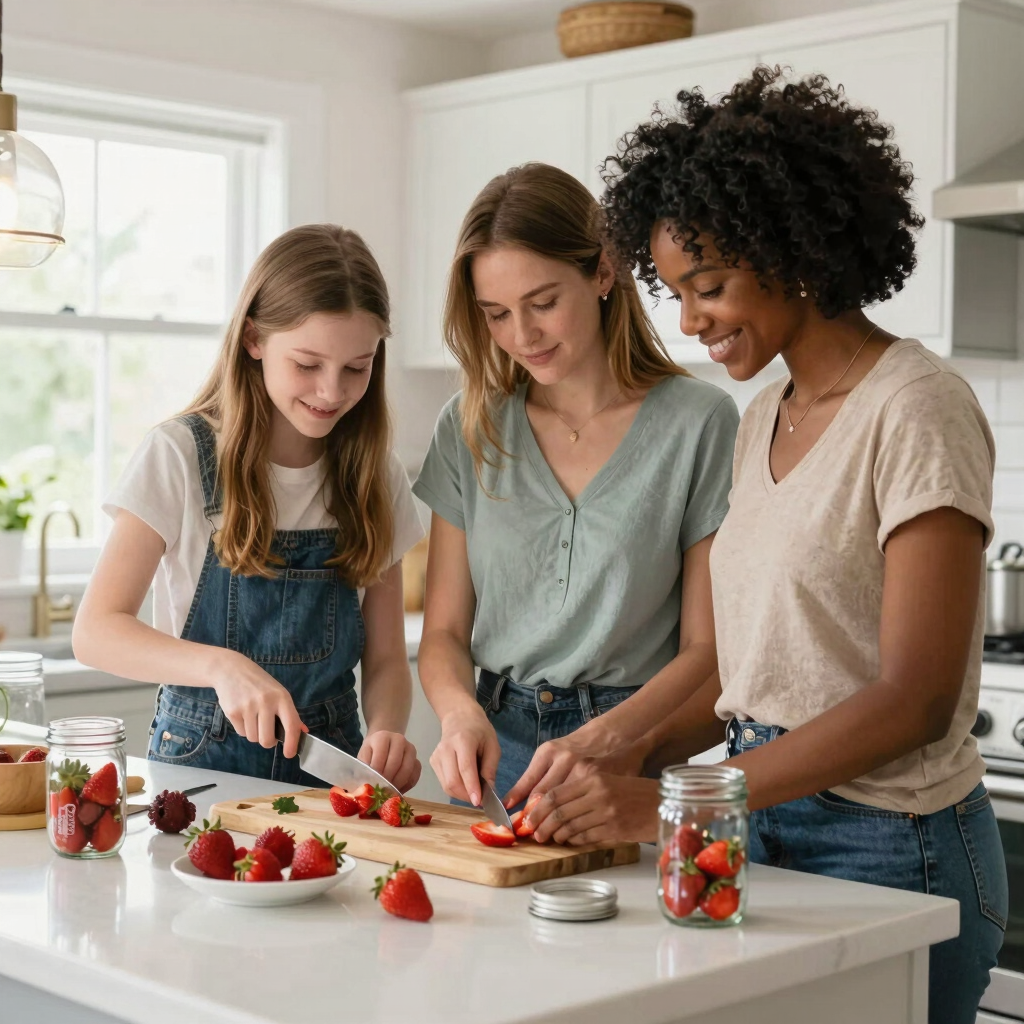
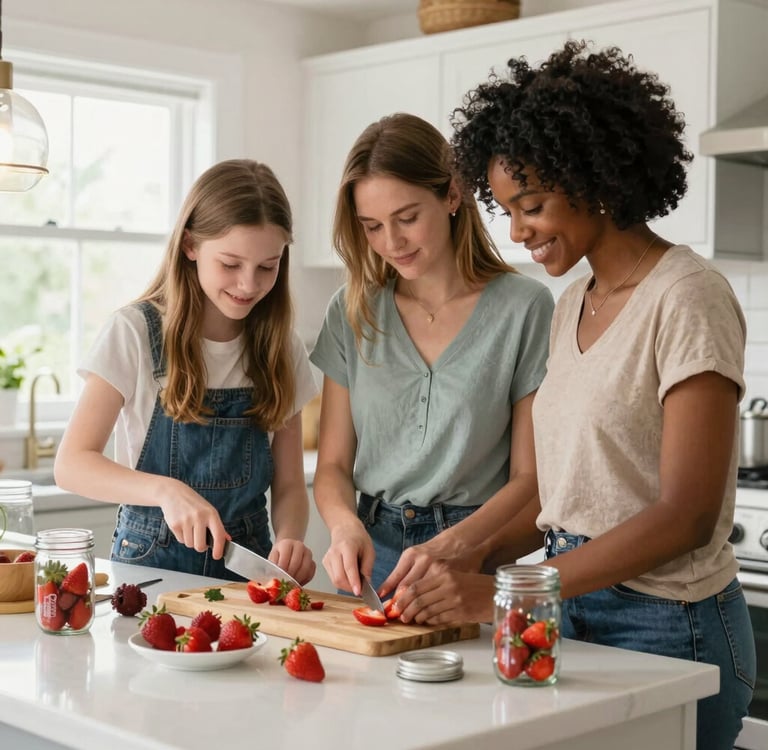
The strawberries are in. If you've been watching the farm stands and the farmers markets the past few weeks, you already know. The flat of berries sitting in the sun, deeply red, fragrant from three feet away, gone by noon. That smell, warm fruit and summer and something almost floral, is one of the clearest seasonal signals we have left in a world where most produce is available year-round and tastes like nothing in particular.
For a lot of people, that smell also signals something else: it's time to put some up. Which is where a canning bee comes in.
A very old idea
A canning bee is simply a group of people who gather to preserve food together.
The word "bee" in this sense is old. It referred to a communal work gathering, neighbors coming together to accomplish something that was easier, faster, or more enjoyable done as a group. Quilting bees. Corn husking bees. Barn raising bees. And yes, canning bees, where women would spend a day in someone's kitchen putting up the season's harvest.
The tradition largely faded in the decades after World War II, as home food preservation went from necessity to niche. Supermarkets made it possible to eat strawberries in January. Freezers changed how we thought about surplus. The urgency that had gathered people around a stove together dissolved, but the canning bee never entirely disappeared. It just got quieter.
What happens at a bee?
I've been to canning bees hosted by neighbors in small kitchens with two burners going and jars lined up on every surface. I've hosted them myself, for close friends who wanted to learn and for people who already knew what they were doing and just wanted the company.
They're different every time, but a few things are always true. The work gets done faster. Four people processing flats of strawberries—hulling, slicing, stirring, ladling—move through what would take one person most of a day in a few focused hours. There are enough hands to do the careful parts carefully, and someone to chat with while you do them.
This is the part I think matters most: In a room with people at different levels of experience, something always gets passed along. The person who's done this for twenty years shows someone else how to tell whether a lid has sealed. The newcomer asks a question nobody else thought to ask. A recipe gets shared, or questioned, or improved on the spot.
And it's simply more enjoyable. Preserving food is satisfying. But preserving with people you like—music on, multiple hands chopping ingredients, steam rising from the pots, jars coming out of the water bath one by one—it’s something else. That's the kind of afternoon you remember.
Why this site
Canning Bee exists because I think the canning bee, or the spirit of it, at least, is worth reviving. Not as nostalgia, but as a genuinely useful practice for people who want to experience food preserving and learn and share with each other while doing it.
This site is for home preservers at every level. For people who've been putting up jam since before I was born and want to go deeper into the craft. For people who bought a flat of strawberries on impulse this week and have no idea what to do with them. For people somewhere in between.
And if you've never done it before, or haven't done it in a while, find someone to do it with. A neighbor, a friend, a family member who remembers how. Pull up a second chair to the stove. Make it a bee. That's what this site is about.
Canning Bee is a site about the best of home food preservation—gathering, preserving, and sharing.